Green Assessment Potential Score GAPScore for Homes

Welcome! From the Founder and CEO, Steve Pohlman

Monday, January 29, 2018

The best land usage on your home’s property.

When people think of green in the home, the last thing that is paid attention to is the landscape and the benefits that come with the property.  Some say that there is no such thing as a green home because the land that it replaces is never the same as the original ecosystem that existed there before building.  However, the impact of your house is really based on the amount of original ecosystem that surrounds it on the property.  The fact that new track homes are clean with new lawns and asphalt driveways are not anything like or resembling the original ecosystem.  This is where home owners can make a quantifiable difference in the environment for the better.

The soil of the earth and it's plants are like the lungs of our planet.  It's approximated that 3% of the square footage area, not counting roads, of the United States is inhabited by residential and commercial buildings.  If you had a lung blockage of 3%, you'd be in the hospital or at least on medication.

The goals for responsible stewardship of your property is to reduce waste, retain and utilize resources, and replenish surface foliage.  Waste is anything that doesn't stay on your property or contaminates the environment.  By reducing the use of petroleum based asphalt or non porous concrete as walkways, a home owner can reduce waste from leaching and water damage.  Water management is important part of sustainability and pertains to land use as well.  The water on your property should be properly used and distributed to foliage and returned to the water tables for natural runoff.  Natural run off can turn neighborhoods into swamps as they were originally.  So home owners are encouraged to use municipal systems if there is a need in your local community and retain water for personal use in a rain water collection and irrigation system.  Water is a resource to conserve and utilize with care and your property can take advantage of that to enhance the ecosystem.
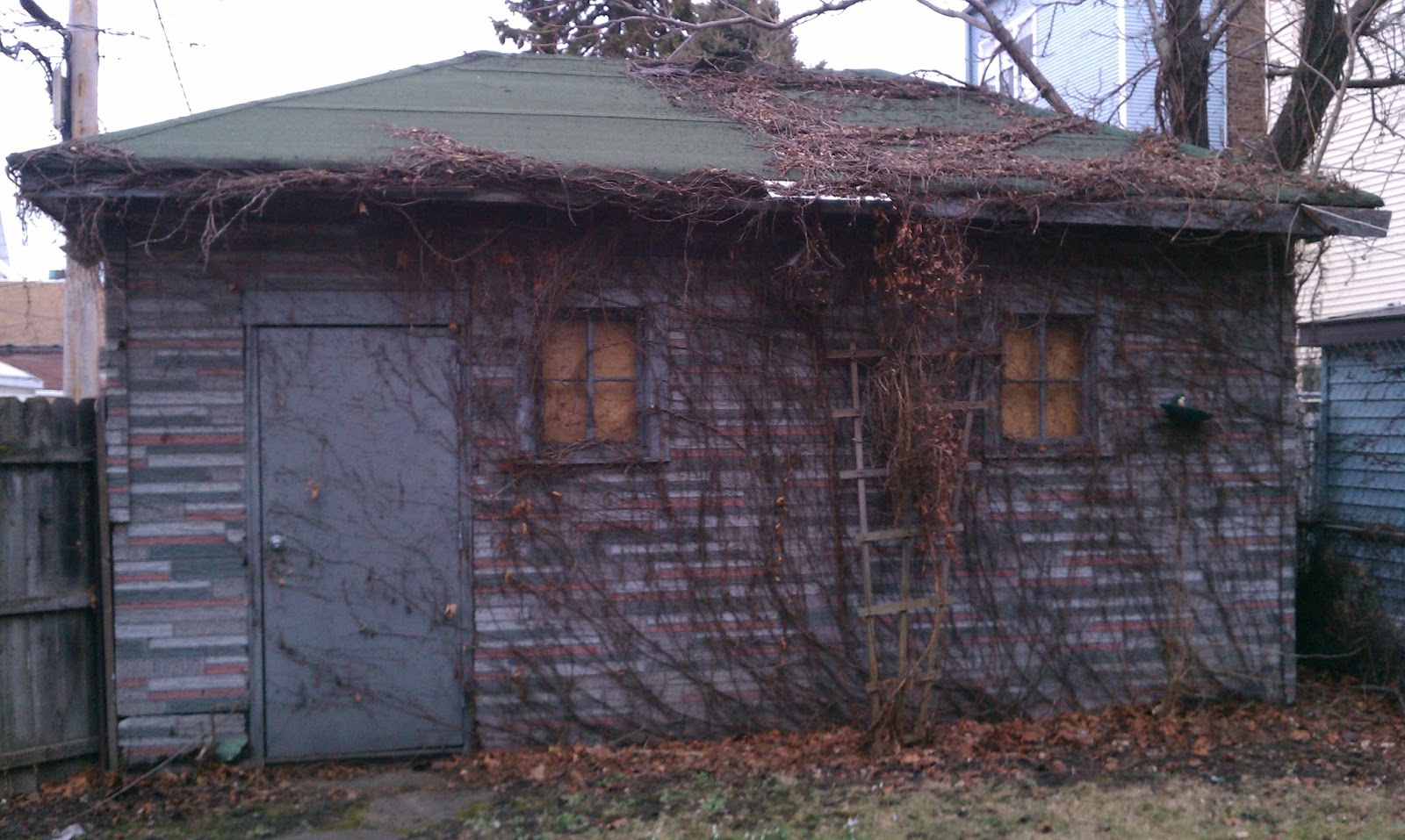
The GAPScore looks for design techniques that incorporate these goals into the property and work with the environment regardless of the lifestyle changes of the owners.  The percentage of your property that is open soil for foliage growth is an important aspect and urban dwellers are generally at a disadvantage when the amount of space available is taken in consideration.  The amount of physical surface area of the globe is expanded when you build a structure.  The area that used to be earth covered by the roof now contains walls with greater surface area.  This extra area can be covered with foliage that would increase your land use management skills and have a better impact on the environment.  Homes with green or vegetative roofs, living walls, and vines on the walls are more environmentally compatible than a building without.  So, if your lot size is environmentally challenged for living space and the ecosystem, then there are always techniques to enhance our environment.

The landscaping for green techniques are using native plantings for decoration with a dual purpose for aesthetics and the environment.  When a tree is planted in the parkway of your house, it's to beautify the neighborhood.  When you plant a tree and decorative grasses on your property, it looks great while providing resources for composting, wind breaks, air quality, natural habitat and shade for energy efficiency.
Here's some great links from Better Homes and Gardens and the Landscaping Network for your information.

Better Home & Garden green-landscaping

Landscaping Network.com landscape-design


Driveways have never been an issue until now.  The appraisers are looking for paver, crushed limestone, and porous concrete or materials for driveways because they are more expensive to install but also have a green sustainable potential benefit.  The amount of water that stays away from nonporous concrete and flows through to the earth below is better for the environment.  The less area used by a driveway is better also.  So, urban and city residents have an advantage by not having a driveway, sharing or using a public alley way as a driveway.

Land use from neighborhood development has design water management techniques that flows surface water past natural aquifers and tributaries.  Areas that may have had surface water or flooding during wet seasons are now dry areas.  This makes for a stable dry ground area on which build.  It takes a lot of water in the soil to fill aquifers and it takes a lot of time for the ground to soak up and relaese that much water.  When the water is passed through sand like ground it can move the earth and cause sink holes, sliding or sink-age in entire neighborhoods,  Storm water management tries to reduce the risk of sinkage by diverting water away from neighborhoods.  Many times this system can be efficient to the point the soil doesn't get replenishment.  Plants can only absorb so much water and the water moves too fast for the aquifers to replenish.  So through water management and land management skill, the water on your property can stay on the property longer and distributed slowly and responsibly through the newly created soil from your luxurious vegetative landscaping.  This will help provide cleaner drinking water for generations to come.  By using the ecosystem with your land, your communities can stay more sustainable.


Value of Green in a House? A Study from Evan Mills

Shows how fuzzy the appraisal process can be when green doesn't have a baseline. 
Here's a link for the download of 2015 reports.  It's really quite interesting.


That's why we made GAPScore.com

Thursday, August 3, 2017

 
Watch a special panel with Vice President Gore and four Climate Reality Leaders.

Dear Steve,
The truth about the climate crisis is inconvenient to Big Polluters.
But you know better. That’s why we’re counting on you to fight alongside us to spread climate hope.
When you support Climate Reality today with a gift of $25, $50, or $75, you’re supporting thousands of well-trained leaders on the front lines of this important fight. Plus, you’ll get an exclusive chance to win one of five signed copies of former US Vice President Al Gore’s new book, An Inconvenient Sequel: Truth to Power.
ENTER TO WIN
The truth is, climate solutions exist, and they’re not inconvenient. Renewables have never been as cheap or as readily available as they are today. Solar jobs are growing 17 times faster than the rest of the US economy. And almost every country in the world has agreed to cut greenhouse gas emissions.
Your gift today can help make those solutions a reality. Vice President Gore’s new film An Inconvenient Sequel: Truth to Power isn’t just about one man working to solve the climate crisis – it’s about people like you, Steve, who are stepping up to join the movement.
Thanks to your support, we can fight back against a White House that denies the climate crisis and prioritizes the profits of Big Polluters over our planet. We can equip thousands of new activists with the tools to empower their communities to take climate action. And we can educate future generations to embrace clean energy solutions and foster a more sustainable future.
Don’t miss your chance to win a signed copy of the companion book to the film An Inconvenient Sequel. The deadline to enter is August 25 so don’t miss this exclusive opportunity!
Support the climate activists of today, tomorrow, and future generations. Now is the time to be inconvenient.
- Your friends at Climate Reality

WIN A SIGNED COPY OF VICE PRESIDENT GORE'S NEW BOOK
AN INCONVENIENT SEQUEL: TRUTH TO POWER
ENTER TO WIN
                    
NO PURCHASE NECESSARY. Void where prohibited. Open to legal residents of the 50 United States and DC, 13 years or older. Begins July 25, 2017 ends August 25, 2017. To enter and for Official Rules, including odds, and prize descriptions visit www.climaterealityproject.org/win.
© 2017 The Climate Reality Project
DONATE
Click Here to Unsubscribe


This was good enough to put on our blog.  "Thank you" to the Climate Reality Project.

Monday, June 26, 2017

Dear Residential Industry Leaders,

I found that AI changed the Green Appraisal addendum as of May 16th.

Here's a link for our new beta site. GAPScore Beta 2017

I will be giving a presentation on the GAPScore program and how it influences the the residential related industries.  Your attendance would be greatly appreciated.

MRED office conference room
Address: 2443 Warrenville Rd #600, Lisle, IL 60532
July 11th     1:00-2:30
Only 30 seats available

My doors are always open to people that promote the green.  Please call me at 312-292-8575 or email gapscore@gmail.com.  Look forward to seeing you there.

Thank you very much.

Best Regards,

Steve Pohlman

Tuesday, January 24, 2017

There’s common sustainability features in all homes.

Green is a collection of the best of all the best.

At the time your house was built, the developer and builder wanted to provide a top quality product with the latest techniques possible.  Years of training and trail and error went into the design of your home.  The most important thing a builder wants to do is to sell the finished product. So, they add view-able amenities and non-view-able amenities.  The amenities are attributes that create a more comfortable environment which is a long standing philosophy to sell homes.  These common attributes are more prevalent in custom homes and became increasingly common in track built suburban homes.  You can see trends in housing mechanical technology and design from the past change as health and energy concerns the public vision.

The best air quality techniques in your home.

Open fossil fuel burning flame chimneys and hearths are still a air quality hazard throughout the world.  At one point in time, the building in this picture had a coal fired boiler and natural gas wall and ceiling lamps.  The home was originally built in 1894 and renovated in 1942, and was then renovated again in the 1990's.  
During the first renovation the gas lines were used for electrical, mica insulation poured into exterior wall cavities, and a forced air furnace replaced the coal burner.  Sheet asphalt siding was installed covering the original basement window placements on the north and south walls and provides a decent wind protection as a house wrap air and moisture barrier. Vinyl siding was later added over the asphalt sheeting to the front and rear of the house, which you'll still see today.
During the second renovation, an electric static air purifier, cloth wiring replaced, exposed foundation and framing were paint sealed in the basement, new windows, plumbing vent pipes repaired, simple spray foam air sealing techniques and bathroom exhaust fans were added.  
In the summer, the house is primarily shaded after noon. So, open windows utilizing natural ventilation for cooling is enhanced by ceiling fans on each of the upper floors.  A central air conditioning unit should be installed to get the most air quality control over allergens and city street dust. Ceiling fans also support the mechanical air filtration during enclosed winter months. Carpeting in the bedrooms may seem comfortable, but carpeted flooring wears down and releases fibers into the air while also collecting dust and allergens. Solid smooth flooring is preferable for air quality purposes. Providing a HEPA air filtration panel, sealing ventilation ducts to the forced air furnace would also enhance air quality.  
Hopefully, the individual that bought the property a year ago will renovate a little in the "right" air quality direction to continue the trend.

Find out more about air quality at:


Monday, January 23, 2017


How green is my old house?

Green design in homes is always state of the art at the time.

Design Builders have been building the best for, and with, less.
  Comfort-ability has always been an issue for builders everywhere.  Whenever there is a budget, there is a reason to want to add more than is possible to spend.  So, things get set aside for future projects. The builder may only be required to provide a dry operational structure for you to build upon.  The design aspects of being green are in the fact that every design aspect of saving material costs are designed into a "less expensive to build" home.  
  When the bath and kitchen are within 10 feet of each other or shares a wall, it takes less material to plumb.  This type of configuration has a longer life span because of the risk of material loss from environmental use. It also reduces water use when the heater is within 10 feet of the faucets.  The wait time for warm water is minimal and more efficient.
  When a roof is open to direct sunlight, it's good for the entire structure.  The suns rays dry out the roof after rain and snow. The roof get's warm and creates convection of humid or exterior air through the walls to potentially cause damage from condensation.  In desert sun belt areas, the sun is not your friend and it's very dry.  Roofing materials that are used in these types of environments may change. One material may work better for your region, but the goal is the same, keep the sun thermal radiation out, keep the rain and snow off. This philosophy is green for sustainability.  
  Add central air conditioning to your mix and it's a different approach.  The roof and walls are sealed to contain the conditioned air within the cavities of your walls.  When you insulate the walls with any material, the air inside of the wall slows down or stagnates.  The best results happen when you air seal the tops and bottoms of every exterior wall cavity allowing only small amounts of conditioned air into the walls through interior wall outlet and switch placement holes.  Air sealing your house is really practicing the "no water in, no water out" train of thought.  In this case, the water is in vapor form as air with 50% humidity.
Window placement, covered porches, flooring, and orientation are not only pleasing to the eye, but also confirmed green standard design aspects that were built into the structure long ago.  These design traits are important for our sustainable future.

So, how green is my home?  That's a good question.  I asked myself that very same question.  My home was already built and move in ready.  I didn't even have to paint.  When we looked at houses, I noticed energy efficiency design traits in every house, but chose the one I now have.  It's good with energy after I made a few air sealing, mechanical, and insulation upgrades to spots missed by the builder that renovated it in 2001.  My winter natural gas bill on a 90% energy efficiency forced air furnace is under $140.  The electricity use with central air conditioning (we only use it when it's really hot, about 8 weeks total) costs less in the summer than the rise in the winter gas bill.


Sure, there are environmental problems with my house, but my gas bill was reduced by $100 a month in the middle of winter.  The environmental problems concern the air quality, solar, land use and water management.  A non porous driveway that extends the length of the lot, leaving very little open land for foliage.  I don't have a solar panel system, but it is a south facing roof. And the designed openings with tight windows are well proportioned for green. On some days, there's little light in certain rooms and a light is always on when occupied.  There is a radon system, because of the air sealing and finished basement restricted what's called "natural ventilation".  We would score an 11 ppm radon (that's low but detectable), if the radon mitigation system didn't work.  I should have it retested soon.  
The second floor was enlarged during renovation and the bedroom floors are all engineered laminate with a life expectancy of 30 years versus the first floor flooring that has sustainable hardwood and tile with a life expectancy of more than 100 years.  The basement has carpeting and a small laundry area portion is tiled on the slab.  There's no water sense low flow certified faucets, no energy star appliances like water heater, dishwasher, clothes washer, or furnace with a/c, but all four of the toilets are low flow 1.6 gallon flush.  My house has more green potential than I can tackle right now.  I'll take care of them as the materials run out of life as normal maintenance.

When I bought the house, there wasn't a GAPScore available.  So, I originally devised it for my own use in 2007.  I found that my house GAPScored at 24.3 and wasn't that green. It wasn't even a GAPScore blue, an upper yellow showing potential, actually.  There's green in it though.  After the little work, it GAPScore's at 29 (still, it's a low blue) overall sustainability with a pretty good energy score. It could be a lot better environmentally.  In time, it'll change again for the better because I know what it needs.

How do I know this?  Because I GAPScore verified it myself by using the green assessment test as a tool from www.gapscore.com

Remember This
Green home design standards are built on the past's best results.
There’s common features are in all homes for sustainability.
Green is a collection of the best of all the best.
The best air quality techniques in your home.
The best water usage in your home.
The best land usage on your home’s property.
The best solar design aspects.
The best energy usage techniques.
The best sustainable design traits.
One house is better for all of us, the one that’s greener.

Saturday, September 3, 2016

There is green in your home, the gray areas enlightened

Is it wrong to green wash your home when you sell? Absolutely. Is it wrong that roofs covering your porch and decking is a green feature in the design for sustainable architecture? Not at all.  Green washing is saying that your house is 100% green, when it's not.  Just having a green feature like a bamboo floor or active thermal solar panel doesn't mean that your house is totally environmentally efficient.  In today's marketplace, no house is 100% green. The only green house that's built is the one that isn't built at all.  Everyone knows that is not possible. Because we need residences and dwellings for comfort, safety, and well being.  Home building is an economic necessity.  So, it's been backward logic to say, when we build it, we should not build 100%  of it to last.  It's an economic sustainability issue.  Common shingles only last 35 years. Natural clay tile shingles last 80-100 years.  Sustainability in the market place is based on immediate cost reduction during construction and not-so long term repair and replacement.  Our health and sustainability of the species is directly related to the choices we make during these economic transactions.

We've been building homes to be easily upgraded.  The problem occurs when the house is repaired but not upgraded, or worse downgraded, and the owners ignore or are not conscious of the green concepts for overall sustainability.  Green certifications have pointed out the green features that are appropriate for environmental sustainability in design.  Many DIY television shows provide information on efficiency and aspects of the home's repair, yet lack the building science knowledge of a certified Leadership in Environmental and Energy Design Associated Professional (http://leed.usgbc.org/), Passive House International (http://www.passivehouse-international.org/), Green Globes (http://www.greenglobes.com/), BREEAM (http://www.breeam.com/) or any certifications professional.  The World Green Building Council (http://www.worldgbc.org/) and International Code Council (http://www.iccsafe.org/) have outlined the commonalities of the buildings for efficiency that are effective anywhere you may live.  Many of the design features common among these certifications were derived from studies of existing buildings.  The basic lessons or principles of Architecture are intertwined with today's data knowledge set to create the combinations for the ultimate working order of a structure.  That is why we can retrofit common homes and provide an upgraded product with amazingly good responses for environmental sustainability.  However, the ability to upgrade all of the green attributes of a home to the level required to minimize the ability of your house to affect climate change is a bit of a burden on the pocket book.

Some long term home owners have older houses and have continually upgraded as the repair needs occurred and have kept up with or even surpassed updated building techniques.  Retro-fitters have purchased depressed older houses and upgraded extensively over a few months time to achieve the markets appealing amenities with minimum requirements.  Each upgrade can incur a green design element to the original structural environmentally efficient design.  Addition of insulation, energy rated windows, bathroom and kitchen exhaust fans, high efficiency furnace or boiler, above ground decks, tile and hardwood flooring, and finished basements are green design features considered valued upgrades to home appraisers.  They're also valued by move in ready minded buyers because they provide comfort and a sense of well being.  When you add the environmentally efficient design compliments of a house with those green attributes, the structure has a much better chance of continuing in the marketplace beyond today's appraisal estimates.

The home should work in coordination with every aspect of the environment: air, water, land, solar, energy, and overall sustainability. Some features are good for several different elements.  Each attribute is a portion of a system which is to be fulfilled in order for a property to perform environmentally efficient to the point of becoming less dependent on nonrenewable and toxic resources.

By quantifying the basic key individual design traits and the associated  impacts in combination within the house, each green element and overall potential for sustainability becomes apparent.  The gray areas of your house become enlightened at the low end of the green spectrum in terms of yellow and blue, or "not quite green yet". The total combination of the green features in design add up-to the levels of yellow, blue, light green and dark green whether your house is prior certified green or not.

So, no matter what anyone says, GAPScore doesn't green wash.
We show the yellow and blue, and the green.